Increase in the Number of Children Who Receive Federal Disability Benefits for Speech and Language Disorders Similar to Trends in the General Population, Says New Report
News Release
Last update January 26, 2016
WASHINGTON – The increase in the number of children from low-income families who are receiving federal disability benefits for speech and language disorders over the past decade parallels the rise in the prevalence of these disorders among all U.S. children, says a new report by the National Academies of Sciences, Engineering, and Medicine. The report’s findings underscore the long-term and profound impact of severe speech and language disorders on children, as well as the degree to which children with such disorders can be expected to be a “significant presence” in the Supplemental Security Income (SSI) program.
The Social Security Administration provides benefits to children with disabilities in low-income households through the SSI program. More than 1.3 million children received SSI disability benefits in 2014; 16 percent of those – or 213,668 children -- are receiving benefits because of primary speech and language disorders. In the past decade, the size of this group has more than tripled; between 2007 and 2011, the number of children who began receiving SSI benefits for speech and language disorders increased by nearly 40 percent. The Social Security Administration asked the National Academies of Sciences, Engineering, and Medicine to identify trends in the prevalence of speech and language disorders among U.S. children and to compare those trends with changes observed in the population of children who receive SSI.
Between 3 percent and16 percent of all children in the U.S. experience disruptions in communication because of speech and language disorders. In their most severe forms, such disorders represent serious threats to children’s social, emotional, and employment outcomes that can be expected to persist over a lifetime, said the committee that wrote the report. About 40 percent of children with speech and language disorders have additional mental and physical health conditions, such as intellectual disabilities, autism spectrum disorders, and other neurodevelopmental and behavioral disorders. The best available evidence shows an increase in the prevalence of speech and language disorders over the past decade in the U.S. child population. Two national surveys showed increases of 26 percent and 56 percent during the years on which this study focused. Trends observed in the SSI program for children with speech and language disorders are consistent with this overall increase, the report says.
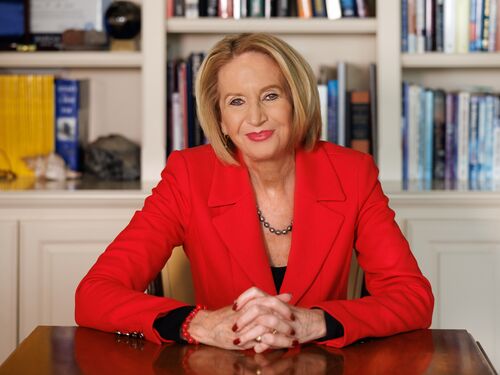
“The evidence clearly shows that children with severe speech and language disorders, especially those from low-income families, are at increased risk for poor academic achievement, mental health and behavior disorders, persistent underemployment, and other lifelong, serious consequences,” said committee chair Sara Rosenbaum, Harold and Jane Hirsh Professor of Health Law and Policy and founding chair of the department of health policy, Milken Institute School of Public Health, George Washington University. “Although treatment can help improve their conditions, children with these severe disorders are likely to face substantial functional limitations and will continue to remain medically eligible for SSI benefits.”
To qualify for SSI benefits, a child’s speech or language disorder must be severe enough to meet the SSI medical eligibility criteria and their families must demonstrate financial need as defined by the program. The evidence required by SSA to document the severity of disability is extensive and relies on multiple sources including educational and clinical evaluations -- an approach consistent with those currently used in professional practice, the report says.
The majority of children who receive SSI benefits are from families with a household income of less than 200 percent of the federal poverty level. Children of families with low incomes are more likely than the general population to have disabilities, including speech and language disorders, the report says. Following the 2008-2009 U.S. recession, more families would have met the financial eligibility criteria for SSI. This means that an increase in the number of children on SSI with speech and language disorders may reflect not only an increase in the prevalence of the disorders but also an increase in the number of children who meet the poverty threshold for SSI eligibility, the report says.
Severe speech and language disorders are likely to persist throughout childhood and adolescence, the report says. As a result, few children receiving SSI benefits for speech and language disorders are likely to leave the program because their conditions have improved. A new impairment code for speech and language disorders that was introduced in 1994 also helps explain the increase of children receiving SSI benefits, the report says. The current total number of recipients reflects both the accumulation over time of new individuals in this impairment category and very low attrition from the program.
The study by the Institute of Medicine of the National Academies of Sciences, Engineering, and Medicine was sponsored by the U.S. Social Security Administration. The Academies are private, nonprofit institutions that provide independent, objective analysis and advice to the nation to solve complex problems and inform public policy decisions related to science, technology, and medicine. The Academies operate under an 1863 congressional charter to the National Academy of Sciences, signed by President Lincoln.
Social Media:
#SSI
Contacts:
Molly Galvin, Senior Media Relations Officer
Emily Raschke, Media Assistant
Office of News and Public Information
202-334-2138; e-mail news@nas.edu
Pre-publication copies of Speech and Language Disorders in Children – Implications for the Social Security Administration’s Supplemental Security Income Program are available at www.nap.edu. Reporters may obtain a copy from the Office of News and Public Information (contacts listed above)
THE NATIONAL ACADEMIES OF SCIENCES, ENGINEERING, AND MEDICINE
Institute of Medicine
Board on the Health of Select Populations
Division of Behavioral and Social Sciences and Education
Board on Children, Youth, and Families
Committee on the Evaluation of the Supplemental Security Income (SSI) Disability Program for Children with Speech Disorders and Language Disorders
Sara Rosenbaum (chair)
Harold and Jane Hirsh Professor of Health Law and Policy
Milken Institute School of Public Health
George Washington University
Washington, D.C.
William J. Barbaresi
Associate Chief, Division of Developmental Medicine,
Director, Developmental Medicine Center, and
Wad Family Foundation Chair in Developmental Medicine
Boston Children’s Hospital; and
Associate Professor of Pediatrics
Harvard Medical School
Boston
Stephen M. Camarata
Professor of Hearing and Speech Sciences
Vanderbilt University School of Medicine
Nashville
Christine Dollaghan
Associate Dean and Professor
School of Behavioral and Brain Sciences
University of Texas
Dallas
Sidney M. Gospe Jr.
Herman and Faye Sarkowsky Endowed Chair,
Professor of Neurology and Pediatrics, and
Head, Division of Pediatric Neurology
University of Washington
Seattle
Gloria L. Krahn
Barbara Emily Knudson Endowed Chair in Family Policy Studies
Oregon State University
Corvallis
Elysa Marco
Associate Professor of Neurology
School of Medicine
University of California
San Francisco
Mary Pat Moeller
Director, Center for Childhood Deafness, and
Director, Language Development Laboratory
Boys Town National Research Hospital
Omaha, Neb.
Susan L. Parish
Nancy Lurie Marks Professor of Disability Policy,
Director, Lurie Institute for Disability Policy, and
Associate Dean for Research
Heller School for Social Policy and Management
Brandeis University
Waltham, Mass.
Ramesh Raghavan
Professor and Associate Dean for Research
School of Social Work
Rutgers, The State University of New Jersey
New Brunswick
Audrey M. Sorrells
Associate Dean of Students for Research
Division of Student Affairs, and
Associate Professor
College of Education
University of Texas
Austin
J. Bruce Tomblin
Emeritus Professor
University of Iowa
Iowa City
Karl R. White
Professor of Psychology and Special Education, and
Director, National Center for Hearing Assessment and Management
Utah State University
Logan
STAFF
Patti Simon
Staff Officer